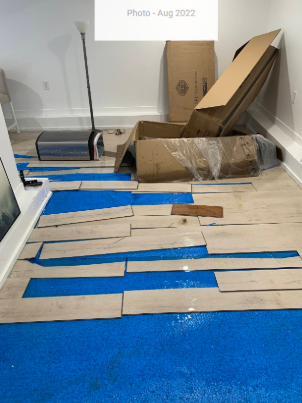

Standing water in a home encompasses a wide range of situations, and homeowners lump them all together, even though the appropriate responses vary quite a bit. An inch of water in a basement after a sump pump failure. A dinner plate-sized puddle under the fridge from a slow ice maker leak. Two inches across a whole finished basement after a burst pipe. Water spreading across a laundry room from a washing machine hose failure. Each of these looks like “standing water” to the person who just discovered it. Each one triggers a different response arc, though. And the difference between what someone can handle with a shop vac and what genuinely calls for professional intervention is usually bigger than people expect.
The other piece is that standing-water accumulation and professional water extraction aren’t really in the same category of service at all. Passive accumulation occurs when water arrives and stays. Extraction is an active process of removing water at a rate and depth sufficient to prevent further damage. Which is why a homeowner researching water extraction services during an active loss situation is really evaluating which category the situation falls into and whether the available tools and time match what the situation actually needs.
Denver-area homes see standing water incidents from all directions throughout the year. Pipe failures during cold snaps. Appliance leaks. Roof leaks after hail. Sump pump failures during snowmelt. Restoration Logistics is one of the Denver-area water extraction service providers responding to these situations across residential and commercial properties. Nothing here is a recommendation of any specific provider. What follows walks through how standing-water accumulation and professional extraction differ, and when the shift from one to the other occurs.
Standing Water Accumulation
Standing accumulation is water that arrived from somewhere and hasn’t been actively removed. Might be a few cups from an overflowing sink. Might be inches across an entire basement floor. The defining feature is that the water is present and not currently being addressed, which differs from the active removal process and from the wet-but-drained state that comes after removal.
See also: TruLife Distribution Transparency Concerns Grow After Details From 2022 Lawsuit Emerge
Why Time Turns Accumulation Into a Bigger Problem
Water sitting in place changes the situation with every passing hour. Porous materials wick and absorb. Wall cavities fill. Wood swells. Mold begins colonizing within 24-48 hours. Bacterial growth accelerates depending on the water source. This is the reason time matters so much on the front end. A minor incident handled inside an hour rarely turns into a mold job. A minor incident that sits overnight often does.
What Professional Water Extraction Services Actually Do
Extraction is the active removal at industrial rates. Truck-mounted extractors pull water at a rate of gallons per minute. Portable extractors reach corners the trucks can’t. Submersible pumps handle deep water in basements and crawlspaces. Wet vacuums clean up edges. Household equipment doesn’t match any of those rates. A shop vac holds a few gallons and moves slowly, which is fine for a small spill. It falls apart on anything larger.
The Volume Threshold That Changes the Game
Small volumes of clean water sometimes fit within the DIY range. A cup of coffee spilled on a countertop. A partial overflow from a bathtub was noticed quickly. Anything you can handle with towels and mopping. Beyond a certain threshold, the math changes. Water covering more than a small area. Water that’s been sitting more than an hour or two. Water in wall cavities or under flooring. Water from any source other than a clean supply. At any of those thresholds, extraction stops being a shop-vac situation and becomes a professional one.
Water Category Determines the Response
IICRC S500 categorizes water into three categories by contamination. Category 1 is clean water from a supply line or water heater. Category 2 carries some contamination. Appliance discharges. Toilet overflow without solids. Category 3 is black water. Sewage. Exterior floodwater. FEMA’s flood damage documentation guidance covers the PPE and mold precautions that apply once contamination is involved. Cat 2 and Cat 3 situations always warrant professional handling, regardless of volume. The contamination alone puts them outside the DIY range.
Hidden Accumulation Behind Walls and Under Flooring
The surface water is only part of what’s actually there. Water migrates into wall cavities, under the flooring, through the subfloor, and into the insulation. HUD’s guidance on rebuilding water-damaged homes makes the structural implications clear. Framing that stays wet swells. Drywall that stays wet loses integrity. Insulation soaked long enough turns into a mold substrate, which is why professional extraction includes moisture mapping and thermal imaging to locate water that isn’t visible on the surface. Shop vacs don’t find that water. It stays where it is and keeps working on the structure.
Documentation and Insurance Considerations
Insurance handling is a real practical difference between DIY cleanup and professional extraction. Professional restoration companies document everything. Photos before, during, and after. Moisture readings. Drying logs. Itemized scopes. All of which becomes the evidence base for insurance claims. Homeowners handling small incidents themselves usually don’t build that documentation record, which is fine when the incident is genuinely minor. It becomes a problem when the incident turns out to be bigger than it looked and the insurance claim gets challenged for lack of supporting evidence.
When Homeowners Can Handle It Themselves
Some situations genuinely fit within the DIY range. Small volume. Clean water. Discovered immediately. Contained to non-porous surfaces or easily-cleaned porous surfaces. Handled within the first hour or two. Towels, a shop vac, fans running for a day or two, and periodic monitoring for hidden moisture usually resolve it. The situations that don’t fit that profile all share common characteristics. Larger volume. Any contamination. Delay in discovery. Involvement of wall cavities or subflooring. Any signs that structural framing got wet? Any of those conditions pushes the situation into professional-extraction territory. Trying to handle it with household tools leads to mold and structural damage, which homeowners end up paying much more to resolve later.

 By
By